Karbala Continues…

As Yazid, the disgraced son of Ameer Muawiyah, claimed the throne and declared himself a Caliph, several letters pleaded with Imam Hussain ibn Ali to march down to Damascus and dethrone Yazid. These invitations were based on the agreement between Muawiyah and Imam Hassan which spelled in clear terms that after Muawiyah’s reign, the legitimate claim to Caliphate will be of Hassan’s younger brother, Hussain.

Most of these letters were from Kufa (south of Baghdad, in Iraq). To test the waters and ensure that these messages were credible, Muslim ibn Aqil, a cousin of Hussain, was sent down to Kufa. His exciting welcome coupled with thousands of people declaring their allegiance to Muslim ibn Aqil made him write a letter to Hussain assuring him that the invitations from the people of Kufa are to be trusted and that he should arrive as soon as possible to meet the people of Kufa.

This letter had departed. Hussain, as desired by his cousin, started his march to Kufa. He arrived in Karbala only to find out that Muslim ibn Aqil was brutally killed as he uttered his last words – I wish I could tell my brother Hussain that the people of Kufa have shown their real colours.

The rest, of course, is well-known history. From being made to suffer for a drop of water to the eventual assassination, Hussain and the brave men and women who accompanied him fought a war they never planned to fight. They gave up their lives because to agree to unjust rule based on tyranny and the rejection of ideas that Prophet stood for was not what they could tolerate. They left the Earth victorious, leaving an example of how history remembers not those who oppress, but those who speak-up.

With the unfortunate spread of terror from ISIS, Al-Qaeda, and the Taliban, the horrific genocide in Palestine to the racism and communalism that is engulfing the world, we witness another re-incarnation of Yazid. As peace is compromised with gross violations of human rights, equality, and justice, the world awaits a Hussain ibn Ali.

May we all imbibe the spirit and ideas that the great Hussain held high. May freedom and liberty wipe out oppression and guarantee peace. May every human be treated as just that – human and equal.

Recalibrating Friendships for Peace

Found “Writer’s block”

<insert=”abrupt start”>

It is necessary to have people around you. Friends make life easy and give you the security you often need. Some do more than what is needed to keep you sane. And some may simply exist. But what makes a friend a good friend?

In materialist terms, someone who helps you with what you need whenever you need is good. Surely, someone who is an emotional support through all your life events is even better. And the one who spends hours to talk and shares your pain is best. But what if you have a friend who does not do any of this?

In one of his famous couplets, Ghalib says:

ye kahāñ kī dostī hai ki bane haiñ dost nāseh
koī chārasāz hotā koī ġham-gusār hotā

What kind of friendship is this that my friends have turned to preaching!
I wish there was one with solutions, wish there was one to share the pain!

Lately, I have been pondering much about the friends I’ve had and I wish to have. In general terms, I have been fortunate to have a good number of friends and never felt the need to have more. To talk for several hours on each call about all the nothing is a habit that I developed with many. But, a few of these have started to trouble me.

A couple of days ago, a decade-long friend asked me what I feel about the Taliban in Afghanistan. As an ardent believer in modern liberal democracy, it was troubling for me to see how horribly people have been clinging on to planes and falling from the sky to their painful death. This was one of those times where I chose to turn myself off from all the news and ignore these events, because of how helpless they make me feel. Having thought all this, I gave this friend an opinion on this situation.

That opinion was that the Taliban may try to be not as bonkers as their ISIS cousins. While both are an afront to humanity and Islam, Taliban now may try to show that they are moderate in an effort to claim legitimacy from the west. They have already declared that they will respect women rights (under Sharia law, whatever their interpretation of ‘Sharia’ is) and press freedoms. This is, and surely will be, simply what they say, and not what they actually do. At their soul, they are nothing less than terrorists who do not deserve to have any power to govern over any people or land.

This opinion was lost in communication. And this emotionally invested friend accused me of going soft on this issue and not caring as much as I should. To this, my true answer was that it was not an issue I would like to care about, simply because of the emotional toll it takes on me. It is the same reason I don’t think much about the ISIS oppression in the North Africa and East Asia. It is for this that I avoid reading all news of Uighurs and Rohingyas. Because as a second-grade citizen of a third-world country, I do not have any voice or power to change what is wrong. And it is a convenient escape to simply not indulge in what I cannot change.

But the accusation that I was not loud enough in calling out the terrorism of Taliban was deeply troubling. Why must I stand-up for every single injustice that happens around the world? Did I ever hold anyone accountable when they did not care about the reckless bombing of Palestine only a few months ago? And simply because one didn’t care enough to speak up, would it fair for me to accuse that person of condoning those attacks? No.

In this political atmosphere, it has become too difficult not just to speak, but also to not speak. That you have to prove your ideas by announcing them every time. It is exhausting to utter each word with calculated measure, and any silence may be interpreted to mean acquiescence.

After much thought, I felt it safe to not have friends who, rather than being a desirable friend who acts as a support, go on to make life hard for you. All this, in return for the care, time, and compassion I invested for over a decade. And it is in this light that I chose to end a few friendships which have been proving to be a bane to my otherwise fortunate and peaceful life. I hope life proves better off without them. For sanity. For peace.

What Keeps Me Busy!

The past month has kept me busy with quite a lot, most of which I shall write about some other time. A lot of it has brought a sense of relief that was desperately lacking in life. All that aside, what is taking most of my time are the Olympics. Not just because of how they’ve always been considered a matter of pride for countries across the world, but also due to the amusing events which one would not otherwise witness.

Take, for example, all the events that involve throwing stuff. Someone somewhere found a ball and challenged everyone to throw it as far as they can, and called it ‘Shot put’. Someone else did that with a disc and called it ‘Discus throw’. For someone, the ball must not have been easy to grip. So, he tied a long chain to it and swung it by that chain, and then called it ‘Hammer throw’. And at last, someone simply threw sticks and called it ‘Javelin throw’.

These are such fascinating events with barely any complications in the rules that one can binge them with all the laziness that nature blesses. From Archery to Omnium, Olympics are a spectacle I wish we could have every year, instead of just once in four! It makes me sad that we are now at the last day of this edition. I must find a worthwhile replacement to fill in the void, lest I prolong my withdrawl symptoms.

In other news, I recently turned twenty-eight. It is such an odd number, despite being an even one. Thankfully, the day coincided with Eid-ul-Azha, which made it easier to cope with the dreadful annual realization of how time is ageing me away. The Eid wishes were more than thrice that of birthday ones, a phenomenon I could easily understand as it becomes tougher to remember friends’ birthday’s as compared to public holidays. Nevertheless, the mutton surely tasted better than usual.

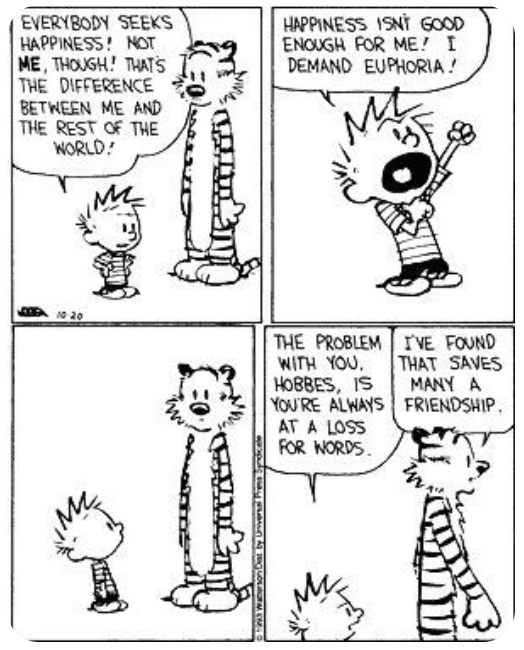
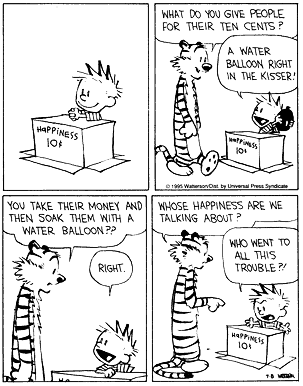
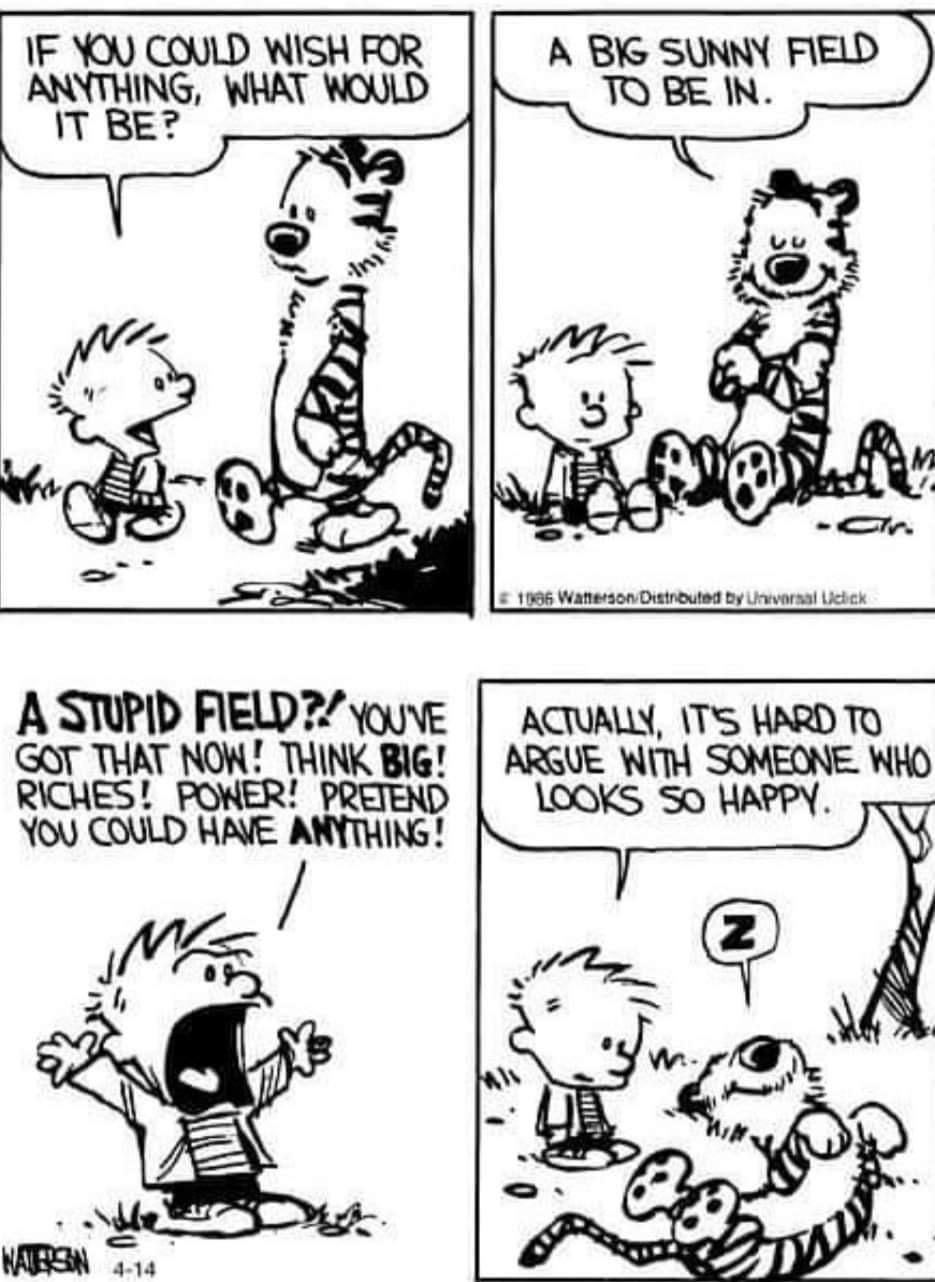
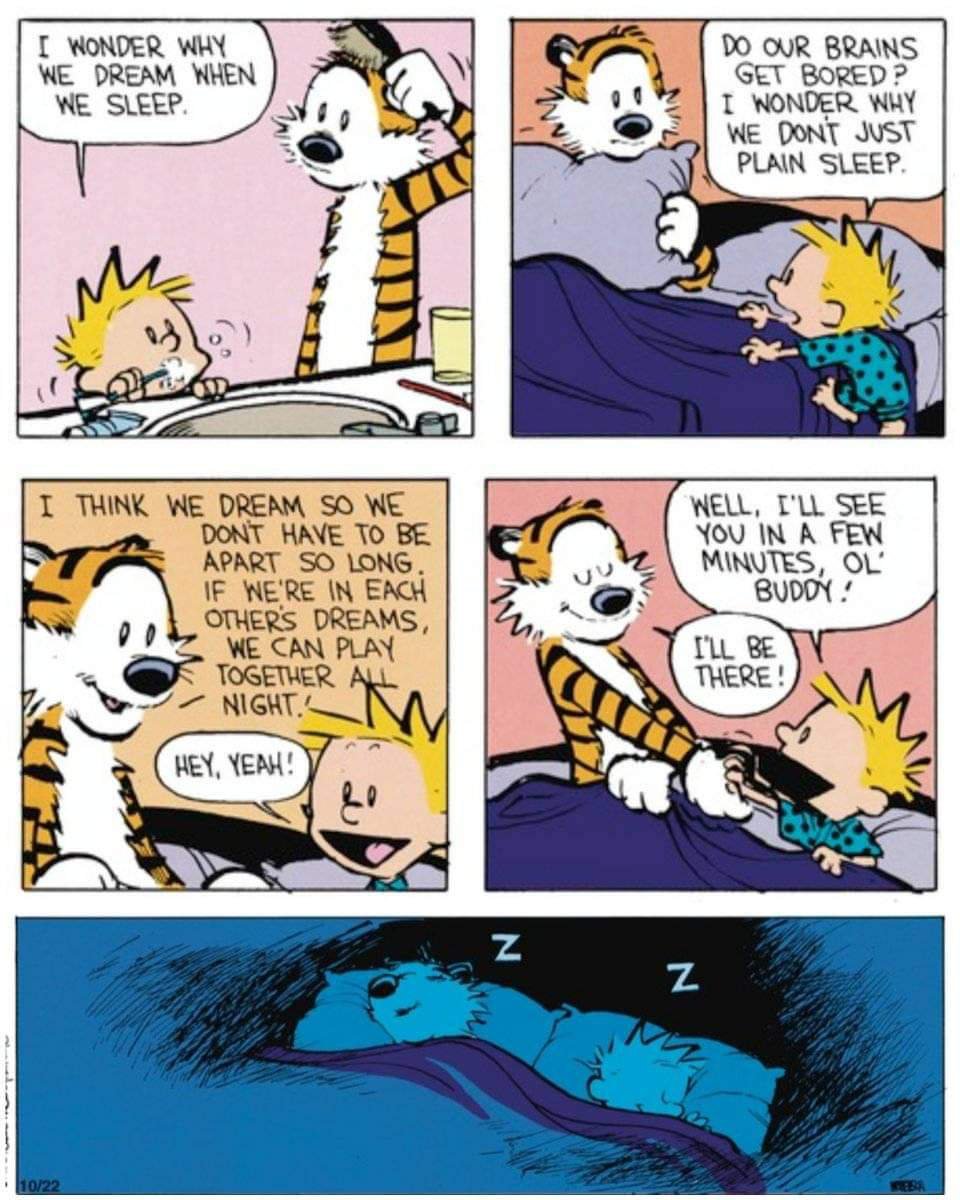
Unrelated to this, my long-lasting love for Calvin & Hobbes has made an appearance. This must be the tenth time I am flipping the entire collection of Bill Watterson’s remarkable work. With every re-read, I understand Calvin a little better. His innocence and childish behaviour aside, his observations teach so much about life in such non-intimidating manner. One has to admire how wonderfully Watterson places the strongest of thoughts in a playful comic. The kid aspires to achieve happiness, often ignoring the reality which is sufficiently happy, if only he could give it a satisfactory glance. 

Suddenly, it is also filled with love, happiness, and contentment. The sweetness between Calvin and Hobbes alone can give you an escape and ease any on-going tensions in life.

If it was not cumbersome, I would’ve loved to post all my favourite panels here. But, this is enough for now. I shall get back to browsing these on my own as I smile at every page I turn. 🙂

#2 – Naala Farsaai / नाला फरसाई / نالہ فرسائی

Phir Woh Raah Guzar Pareshaan Karti Hai,
Bekhudi-e-Isteghbaal Pareshaan Karti Hai.
Hain Hum Bhi Unhi GhaafiloN Mein Se Jinhe,
Talaash-e-Fahm-o-Zakah Pareshaan Karti Hai!

پھر وہ راہ گزر پریشان کرتی ہے
بیخودی ا استغبال پریشان کرتی ہے
ہیں ہم بھی انہی غافلوں میں سے جنہے
تلاشے فہم و زکاه پریشان کرتی ہے

फिर वह राह गुज़र परेशान करती है
बेखुदी इ इस्तेह्बाल परेशान करती है
हैं हम भी उन्ही ग़ाफ़िलों में से जिन्हे
तलाशे फ़हम ो जकः परेशान करती है

Phir Wohi Mushtaaq Aarzu Pareshaan Karti Hai,
Aur Woh Bezaar Tamanna Pareshaan Karti Hai.
Thi Khushi Jiske Shifa-e-Kaamil Ki Hume,
Phir Wohi Tangi-e-Dil Pareshaan Karti Hai!

پھر وہی مشتاق آرزو پریشان کرتی ہے
اور وہ بیزار تمنّ پریشان کرتی ہے
تھی خوشی جسکے شفا ا کامل کی ہمی
پھر ووہی تنگی ا دل پریشان کرتی ہے

फिर वही मुश्ताक़ आरज़ू परेशान करती है
और वह बेज़ार तमन्ना परेशान करती है
थी ख़ुशी जिसके शिफा इ कामिल की हमे
फिर वही तंगी इ दिल परेशान करती है

Phir Woh Naala Farsaai Pareshaan Karti Hai,
Haan! Wohi Ashk Baari Pareshaan Karti Hai,
Imkaanaat-e-Gul-o-Gulzaar Toh Hai Lekin,
Farda-o-Di Ka Tafriqah Pareshaan Karti Hai!

پھر وہ نالہ فرسائی پریشان کرتی ہے
ہاں ووہی اشک باری پریشان کرتی ہے
امکانات ا گلو گلزار تو ہے لیکن
فردا و دی کا تفرقہ پریشان کرتی ہے

फिर वह नाला फरसाई परेशान करती है
हाँ वही अश्क बारी परेशान करती है
इम्कानाते गुलो गुलज़ार तोह है लेकिन
फ़र्दा ो दी का तफ़रीक़ाः परेशान करती है

Kehte Ho Ke Tanqeed-e-Haq Pareshaan Karti Hai?
Aur Woh Nida o Gile Shikwe Pareshaan Karti Hai?
Tum Toh Hogaye Kaamiyaab Us Imtehaan Mein Par
Is Ghareeb Ko Ruswaai-e-Baazi Pareshaan Karti Hai!

کہتے ہو کے تنقیدی حق پریشان کرتی ہے
اور وہ ندا و گلے شکوے پریشان کرتی ہے
تم ٹوہ ہوگے کامیاب اس امتحان میں پر
اس غریب کو رسوائی ا بازی پریشان کرتی ہے

कहते हो के तन्क़ीदे हक़ परेशान करती है ?
और वह निदा ो गीले शिकवे परेशान करती है ?
तुम तोह होगये कामियाब उस इम्तेहान में पर
इस ग़रीब को रुस्वाई इ बाज़ी परेशान करती है

Haan, Wohi Ummeed-e-Wafa Pareshaan Karti Hai,
Aur Intezaar-e-Visaal-e-Yaar Pareshaan Karti Hai,
Kya Khabar Ke Unko Haamari Khabar Ho Na Ho,
Bas Is Khabar Ki Bekhabari Pareshaan Karti Hai!

ہاں ووہی اممیدے وفا پریشان کرتی ہے
اور انتظاارے وسالے یار پریشان کرتی ہے
کیا خبر کے انکو ہماری خبر ہو نہ ہو
بس اس خبر کی بےخبری پریشان کرتی ہے

हाँ वही उम्मीदे वफ़ा परेशान करती है
और इन्तेज़ारे विसाले यार परेशान करती है
क्या खबर के उनको हमारी खबर हो न हो
बस इस खबर की बेख़बरी परेशान करती है

Par Ab Ye Adhoori Rubaai Pareshaan Karti Hai,
Ye Kalaam-e-Khama-e-Kha Pareshaan Karti Hai,
Aakhirkaar, Is Mein Bhi Maqte Ki Koshish Asad?
Aur Phir Takabbur-e-Sukhan Pareshaan Karti Hai?

پر اب یہ ادھوری ربی پریشان کرتی ہے
یہ کلامے خامہ ا خا پریشان کرتی ہے
آخرکار اس میں بھی مقطے کی کوشش اسد
اور پھر تکببرے سخن پریشان کرتی ہے

पर अब ये अधूरी रुबाई परेशान करती है
ये कलामे खमा इ खा परेशान करती है
आखिरकार इस में भी मक़्ते की कोशिश असद ?
और फिर तकब्बुर सुखं परेशान करती है ?

[July, 2013]

Nehru and Ambedkar: Consensus Beyond Politics

Delivering a speech in 1884 to the undergraduates of Cambridge on his Indian experiences, Sir John Strachey, a British Civil Service Officer, asserted that “there is not, and there never was an India.”[1] He claimed that for “the men of the Punjab, Bengal, the Northwestern Provinces, and Madras, should ever feel that they belong to one Indian nation, is impossible.” At the eve of the Round Table Conferences, Winston Churchill turned soothsayer declaring that “India will fall back quite rapidly through the centuries into the barbarism and privations of the Middle Ages.”[2] While on a retrospective assessment, these statements may seem brashly arrogant today, but they were not far from the truth. Overturning these predictions was exactly the challenge before Pandit Nehru, Sardar Patel, and Babasaheb Ambedkar.

The first and the toughest task was to create the idea of India – a national identity which would not only bring several regions, religions, and tribes into one governance system, but also sustain for ages to come. As Tagore remarked in a 1921 letter to a friend, such identity should prevail over the “intense consciousness of the separateness” between various communities.[3] The national identity had to be created by finely balancing the strong grip of the union over the regions, while also allowing adequate space for the regions to assert their own cultural and linguistic identities.

Separated by Paths

To create such national identity, however, required a set of individuals with similar (if not the same) ideals.  As the tallest leader of the Congress and the ‘successor of Gandhi’, Nehru stood at the forefront of this project. Nehru, recognising that Ambekdar is one such person who must be at the helm of nation building, invited him to take charge as the Minister of Law. It was a surprising move not only to most of the people, but to Ambedkar himself. In his last speech as the member of the cabinet, Ambedkar noted that “the offer came as a great surprise… as I was in the opposite camp and had already been condemned as unworthy of association when the interim Government was formed.”[4] However, he accepted the offer “on the ground that I should not deny my cooperation when it was asked for in the building up of our nation.”

Nehru and Ambedkar were united by their common understanding of the nation, its religions, and its caste structures, making them sailors of the same ship doing their part. Barring these ideas, however, there were not many common denominators between them. Ambedkar consistently accused the Indian National Congress of a party run by caste Hindus, while Nehru was one of its most loyal leaders. He went on to contest fierce elections against the Congress both in 1937 (through the Independent Labour Party) as well as in 1946 (through the Scheduled Castes Federation). While entire Congress working committee (along with Nehru and Gandhi) were imprisoned after the declaration of the Quit-India movement, Ambedkar took up the position of the Labour member in the Governor-General’s Executive Council. Most importantly, Ambedkar had several differences with Gandhi and contested the epithet ‘Mahatma’ quite fiercely,[5] whereas Nehru was the ‘chosen successor’ of Gandhi.

United by Ideas

Despite differing political alliances and methods chosen, Nehru and Ambedkar shared similar ideas. When the likes of Patel and KM Munshi objected to Ambedkar’s proposal of including reservations for the Scheduled Castes and Tribes, Ambedkar promptly offered his resignation. To reconcile the differences, Patel called upon Ambedkar and made an effort to convince him to drop the idea. Ambedkar, to support the need of affirmative action, cited Nehru’s words where Nehru “despite being a Brahmin, said that for generations altogether, Hindus oppressed the untouchables and tribes.”[6] As a result of this, and also to keep the brilliance of Ambedkar within the Constituent Assembly, Patel readily gave in to Ambedkar’s demands.

That was not the only time Nehru came to back Ambedkar’s ideas. When a good number of members pressed the Constituent Assembly to adopt the word ‘socialist’ in the Preamble, Ambedkar argued that it would amount to “destroying (of) democracy” as the Constitution should not mandate the socio-economic structure, but should be “decided by the people themselves according to time and circumstances.”[7] To support Ambedkar on this, Nehru made sure to attend this debate despite being hard pressed for time due to his Prime Ministerial duties.[8]

The Hindu Code

Another issue of common interest for Nehru and Ambedkar was the reformation of Hindu personal law, an idea opposed by the tallest of leaders such as Dr. Rajendra Prasad and Pattabhi Sitaramayya. They also became a common enemy in the eyes of the R.S.S., which organised more than 70 meetings to burn the effigies of Nehru and Ambedkar together.[9] Nehru chose Ambedkar to chair the sub-committee to draft the Hindu code. However, failure of getting the Code passed in the Parliament led Ambedkar to resign from the cabinet. Nehru’s plea of patiently proceeding in a timely manner went unheeded. In his resignation speech, he remarked that “the Prime Minister, although sincere, had not the earnestness and determination required to get the Hindu Code Bill through.”[10]

Nevertheless, when the Code was split into four parts and passed in the Parliament in 1955-56, Nehru praised Ambedkar calling him “a symbol of the revolt against all the oppressive features of Hindu society.”[11] Ambedkar, in return, announced that Nehru “will be remembered also for the great interest he took and the trouble he took over the question of Hindu law reform.”[12] This interchange seemed to have erased any bitterness the resignation might have caused.

For the Nation

Much has been written about Ambedkar’s lack of personal connect with Nehru, and his explicit distaste of the Congress. It is true that Nehru and Ambedkar did not share a political stage, let alone a personal understanding. Nevertheless, both acted professionally and displayed statesmanship of highest order to ensure that the nation they were building gets the best of them.

It would surely be a grave mistake to ignore the differences between Ambedkar and Nehru, but a graver mistake would be to create a narrative of conflict between them. Viewing their relationship in the extremes as either white or black does not do justice to the several hues of grey they shared. They did not stand together at the equator, but they were not poles apart either.

[March 2018]


The Pretence of Purpose

Why do we live? It is a question I’ve asked too many times for comfort. While I understand the philosophical bent, I look for an answer which is not completely vague or evasive. I see from people around me that a routine burns the day, events become milestones, and the years we spend take us closer to eventual death. What we achieve or lose is insignificant on any scale of time.

For an Indian male, the life expectancy is just a little more than 68 years. Adjusting for my thankful privilege, it could reach 75. I did dream of my death recently, and the calendar on the wall was of 2068. That is, weirdly enough, when I’ll be 75 years of age. Of course, this is a pretty massive assumption, considering there’s so much wrong that can happen in the meanwhile to quicken the goal – you know, the brutalities of Detention Camps, for example.

Nevertheless, what is the point. Sure, a lifetime will have many struggles, joys, and all the boring void in between. But again, what is the point. What difference would it make to anyone if one were to simply end it all, right away and right now. Why does one have to reach the feeble weakness of old-age, with barely any physical or mental strength, to die. What is will become what was. And what was will be forgotten as those who remember was will become were.

What is the point.

Those who ask this question are often accused of looking at life as a blur. A mess that has resulted from poor mental health which has complicated and entangled too many things without any energy or help to straighten it all out. But aren’t they the ones who see it more clearly than anyone who comments on them? They’ve fully understood the eventual end of life and actively sought it to avoid much pain and trouble.

This does not mean I am contemplating suicide. Not now, at least. I have learnt to create a façade where I pursue happiness and pretend to have found a purpose in life. I’ve heard that there is so much to cherish and enjoy. I’ve been told to value things in their fullest. Evidently, when you look at all the good things in life, you tend to get too busy to think of death. And anyhow, I don’t want the embarrassment of dying a virgin. Sex is a lot of fun, I heard.

I don’t know what to write now. And, do I have to? Why can’t I end this here and click ‘post’? Just like life.

But I won’t end it here. I’ll push through. I’ll find something to write. Just like life.

Do the rains over the oceans matter? The water that evaporates from the seas returns to the seas. The process is quite simple and short. Liquid to gas, gas to liquid. Evaporation and condensation. These are surely the lucky molecules. Luckier than those which evaporate from the sea, get pushed by the south-west monsoon to the land as far as the Himalayas, drop as snow, wait for the summer to liquify them, flow through the creeks, valleys, streams, and rivers, only to eventually join the sea. It’s a cycle. A process.

Neither of these molecules find my sympathies. If the goal is to re-join the sea, both have managed to do it. Those that rain over the sea had it easy, while those that took the longer path found it complex. What I feel for are those molecules which are stuck in a limbo. An odd bunch which hung around over the mountains throughout the summer. They found the winter and sublimation converts them straight from gas to solid. A freely swinging molecule in the air is made to turn to snow, without even being liquid – not even for a brief while. The hope of joining the seas is delayed, almost permanently. Even when it has the audacity to fight through the terrain, it cannot. It will not. It shall remain the snow it never wished to be. And it shall never get to flow an inch, let alone join the sea.

Just like life.

Musings from a Village

Over the last two months, both the coasts of India saw cyclones hit them – Tauktae on the west and Yaas on the east. However, these have had no effect over the central Deccan plateau – the districts of Warangal and Nalgonda. A few clouds rising from these lands created irregular humidity and rushed to join the cyclones as their eyes pulled them. Throughout the last month, I found myself wishing for Monsoon to arrive soon to end the heat and replenish the earth.

Luckily, the Monsoon rains did arrive this week. Despite some good overnight downpour thrice in the last week, there has barely been any increase in the water-levels of the village lake. The regular logging on the roads which creates quicksand-type puddles have been absent, perhaps, due to water easily percolating into a thirsty crust. Nevertheless, the rains are a relief to cherish.

Before the pandemic hit, I have never lived in this village for more than a week at a stretch. It has always been our distant second-home only to celebrate the three Eids. Any plants we would plant during these visits would disappear by the next visit, often due to lack of regular watering. This time, however, has been different. The lemon trees have shown a full bloom which bent the branches with the weight of juicy lemons. The guavas have been too many to count, although monkeys make a good feast of them. The rose plants of various colours bloom so much that my mom has made Gulkand out of them.

The daily life of the residents around us keeps them busy with their routine. They sleep before 8 PM, barely after the dusk ends, and wake up even before the dawn, by 4 or 4.30 AM. By the time I fall asleep, the people around me would’ve had finished half their sleep. And unfortunately, by the time I wake up, they’d be done with half their day. I know that they all have judged me to such extent that it is almost impossible now to change their impression of me.

The rural-life is often called ‘simple’. But that’s a relative term and does not really reflect the truth. If that is simple, it is only because our urban lives have been complicated. Having said that, neither are their lives simple nor our lives complicated. What lacks in these villages is the expression of suffering and pain. Much of what they feel is felt in silence, and most importantly, patience. Our supposedly educated asses have figured out a way to articulate every low we go through. The problems of livelihood, relations, domestic disturbances, etc. are found in both these worlds. It is how we react to them that makes us define whether it is simple or complicated.

In the long run, once the pandemic is in our past, whenever that might be, this village is not going to be my place to stay. The pre-Covid routine of visiting it thrice a year for a few days each to celebrate the Eids will be restored. Until then, it is on me to cherish this lifestyle that I haven’t had, and probably, will never do.

My Pledge of Allegiance

Mosques which follow the Ahle Sunnah Wal Jama’a beliefs follow a practice of conducting congregations to sing praises and salutations to the Prophet (peace be upon him), right after the Friday prayers. Those who oppose this practice claim that it is an innovation (Bida’ah) which came about only in the Indian Sub-continent, often at a gross and unapologetic ignorance of how heterogenous cultures influenced Islamic practices, most of which, if anything, further religious principles. The puritan thought, associated with Salafism and Wahabism, sees religion as nothing but an indoctrination of a way of life that has no scope for any creative expression. This argument of what is a Bida’at-ul-hasanah (a beautiful innovation) and Bida’at-ul-ghalizah (an undesirable innovation) shall keep the sectorial conflicts brimming, and there shall be no end to it.

At the cusp of my 10th and 11th standard, I got acquainted with the poetry of someone who made me fall in love with him, with the Prophet (peace be upon him), and with God. My first exposure was the ‘Salaam’ (salutation) to the Prophet which is ubiquitous in the country – Mustafa Jaan-e-Rehmat Pe LakhoN Salaam (May countless blessings be upon the Prophet, the life of mercy!). Another poem almost as popular is – Ka’abe Ke Badruddujah Tumpe KarodoN Durood (Salutations to you, the full-moon of Ka’aba!).

The attraction wasn’t just that these poems were accepted by the millions as a way to chant salutations to the Prophet, but also the way the words were weaved to form a beautiful narration of his qualities. It is undoubtedly true that most who repeat these every Friday understand neither these lines nor their literary value. Nevertheless, they all know these couplets by heart and swear by them.

The man who wrote these gems isn’t a poet by profession. He is a jurisprudential scholar who dealt with the deepest of intricacies of Islamic law. For his extra-ordinary skills and reasoning, in-depth knowledge, and ability to pen every thought possible, it is reported that Iqbal (the well-known poet) called him the ‘Abu Hanifa of the Modern Age’. Many refer to this person as ‘Ala Hazrat’, with postal stamps and even a train through Bareilly-Delhi-Ajmer-Bhuj named after him.

This is the great Imam Ahmed Raza Khan (Radiallahu Anhu).

Poetry was, if anything, a negligible part of his life. Nonetheless, after having read and listened to all the Urdu I did over the last decades, I feel confident in asserting that his poetic prowess surpasses that of both Mirza Ghalib and Allama Iqbal. Take, for example, the following poem, which happens to be the first poem ever written in the Indian sub-continent in four different languages in every stanza:

Lam Ya’ati Nazeeru Kafi Nazarin (Arabic) – No eye has witnessed anyone similar to you.
Misle Toh Na Shud Paida Jaana (Persian) – Nor do I know of anyone born with your likeliness.
Jag Raaj Ko Taaj Tore Sar So (Purbi) – The crown to rule the Universe rests with you.
Hai Tujhko ShaheDosara Jaana (Urdu) – You are known to be the King of both the worlds.

Listen to a few more couplets of this poem with translation here and here.

As, in the near future, I plan to translate and explain a few of his poems in detail, I will refrain from doing so now. For those who do not wish to wait, I urge you to listen to this, this, this, and this.

Every single time I read or heard one of his lines from his collection, the ‘Hadaiq-e-Bakhshish’, it left me astonished. Never have I understood nor will I ever as to how someone encapsulates the unique ideas of Tasawwuf in such beautiful rhyming sequence. His use of geographical, economic, and sometimes, legal references show that his poems are well-informed by the context and culture of the times. And it does something that is not easy to do – to back itself with the principles of both Qur’an and Hadith, and never overstep the boundaries they draw.

The lasting impression he has had on me has defined much of my thinking and way of life. It is this that made me promise myself that my spiritual allegiance (Baya’ah) must be in his lineage, something that came true almost ten years ago. Of all the blessings I count, having given my oath to him to become a disciple (mureed) in his lineage (silsilah) is surely the most important one.

The Instagram Formula

Scrolling through Instagram is a good concoction of pleasure and pain. As a one year old veteran, I have learnt the patterns people adopt to seek much required validation. For those posting regularly, this validation is of utmost importance, without which, even they would admit, life will be as hollow as India’s oxygen cylinders. Keeping the pretentiousness posed to maintain relevancy aside, this does have an upside for them. The likes, the hearts, and thumbs up received on their posts keep their therapy bills low and the economy of the telecom market pretty upbeat.

The patterns of these posts are not difficult to trace. One of these is what I’d like to call ‘the candidly posed uncandid elegance’. The recipe is simple:

  • Wear a traditional attire – a colourful Kurta with a Chunni light enough to fly at the flick of your wrist. Salwar or Chudidar will also do the magic.
  • Go to a place which has one or both of these – a plant with a good balance of flowers and leaves (Bougainville is recommended) and a building in the background which reminds you of powerless good-for-nothing British stooges of the 19th century such as the ‘high-class’ aristocrats of Lucknow or the traditional Wadiyars of Mysore.
  • Stand where the light is feeble. If you, however, cannot manage this, any good Instagram filter which mellows the colours will do. Alternatively, if you have pretty strong light – such as the Sun – you may consider giving it some pixels through your translucent Chunni.
  • Keep your hair open. Let them fly or make them settle to give an image of disorderly order – casual, yet naturally symmetric.
  • Place your hand with slightly folded fingers at the temple or over the ear. Smile the way Anarkali did when Saleem had his testosterone pumped up the first time he saw her. If not, you may pout with a serious look – a look one makes when they find out Santa Claus is fake.
  • To add some diversity, you may instead use your hands to hold something. A coffee cup is pretty standard in this template.
  • You must not look at the camera. Unlike the camera lenses, your eye lenses are animate over which the rules of Hijaab apply. So, dare not look at the camera! The appropriate go-to is to stare at the top towards the sky as if you are contemplating a critic to Jürgen Habermas’ communicative rationality. However, this is undesirable if you have some body fat hanging down the chin, for these double-chinned curves are not as enticing as curves elsewhere. In this case, you should stare towards the ground as if you’re noticing gravity for the first time and trying to figure out its source.
  • The placement of your leg is important. Standing straight is a mark of weakness, and does not challenge Cerebellum enough. You must then place either of your legs in front and support it only on the toes. It helps you look both thin and tall – objective standards of beauty necessary for more likes. The preferable inclination of this leg is about 20-25 degrees from normal. Ensure that you stay within this window and not be too liberal, lest you do the split and tear several things.
  • Finally, you need an elegant caption. Something that’s been ripped off from the internet is often better and does the job without dropping sweat. As Rumi once said, “let veracity not impede your efforts in quoting me on social media.” Profound words and, at least, twenty more likes right there! To add some pizzazz, an Urdu couplet goes pretty well and also gives the illusion that you are literate in Urdu – a language universally used to build the façade of elegance. And no, it does not matter if you cannot read or write a sentence in Urdu to save your life.

The ingredients are now complete. Post the picture and make sure you check the number of likes every two-and-half minutes. Once you touch the baseline of triple digits, you can rest well. Your mission to seek validation, burn the day, and affirm your relevance is complete. You may now scroll the feed with much confidence and judge every other person, while at the same time, giving them a like to keep up their stream of validation. This mutual appreciation cycle shall keep us healthy and sane.

Palestine – Promised To Whom?

At the start of 1917, Arthur Zimmerman, the head of Germany’s Foreign Office, sent a secret coded telegram to the German ambassador in Mexico. It had instructions for the ambassador to meet the President of Mexico at once, and convince him to join the Central Forces in the on-going World War. It was a desperate attempt to ensure that the US does not enter the War, and if it does, Mexico should use its convenient location to try and neutralise the US efforts and keep it away from Europe. The offer promised Mexico that it would gain back its lost territories of Texas, Arizona, and New Mexico as spoils of war.

On the other hand, the Allied Forces led by the British and French were keen to have US join them. With the unending trench warfare, a strong ally like the US could help them cast a few damaging blows. Russia was already proving to be weak, both on the domestic front due to a strong threat to the monarchy by the Bolsheviks, and the fizzling out of the Eastern European front of the war with improper supplies and re-enforcements.

With many falling pieces, the British became desperate. They decoded the Zimmerman Telegram and shared it with the US, persuading them to join the war. It, however, did not prove to be forceful.

To save themselves and ensure that the sun does not set on their empire, they made conflicting promises to several parties. All these promises had one end in sight – their own victory. Seeking victory is admirable, but when it is based on promises made to allies, knowing fully well that they cannot be delivered, it is the ugliest form of realpolitik.

First, the British aimed at ending the Ottoman rule over Anatolia. As Turkey joined the Central Forces, defeating it became important to ensure that the Bosporus Strait is controlled to keep up the shipping lines with Russia. But to attack the Ottoman, the much revered Muslim power which ruled for over four centuries with the perception of being the ‘Caliphate of Islam’, would not be an easy task. Muslim nations and people across the world would heavily protest it, making the British a direct attacker of Islam. The fact that the Indian sub-continent saw the Khilafat Movement by Ali Brothers, joining hands with Gandhi proved these fears credible. They gained validation from Gandhi who went on to add the restoration of Hejaz to Muslim rule as one of the demands of the Non-Cooperation Movement of 1919. To damage this Turkish hegemony, a revolt had to be fomented from within.

To this end, the British spotted Hussein ibn Ali, the Sharif of Mecca, and more importantly, a descendant of the Prophet and his Banu Hashim clan. In the year 1916, an elaborate series of ten letters were exchanged by Henry McMahon, the British High Commissioner to Egypt (and the same man famous for his McMahon Line that demarcated India and Tibet – now China). Hussein ibn Ali was encouraged to initiate a rebellion by the tribesmen of Hejaz against the Ottoman monarchy. Called the ‘Great Arab Revolt’, it aimed to push back the Turkish ‘foreign’ rule and replace it with the home-based Arab State. A promise was made to create a unified Arab State from Syria to Yemen. To ensure clarity, Hussein ibn Ali added ‘Palestine’ to this territory, which the British approved, believing it to be simply a re-statement of the obvious. It would take four years for the British to change their stance.
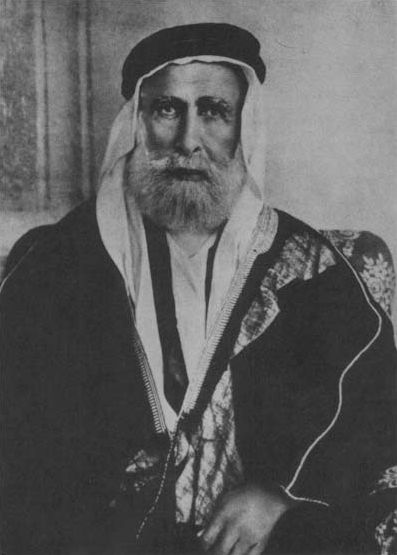
Hussein ibn Ali Al-Hashmi, the Sharif of Mecca, who would eventually be betrayed by the British and defeated by the now-ruling Ibn Saud family which supports Salafi thought, a passive sympathiser of Zionism and Israel.


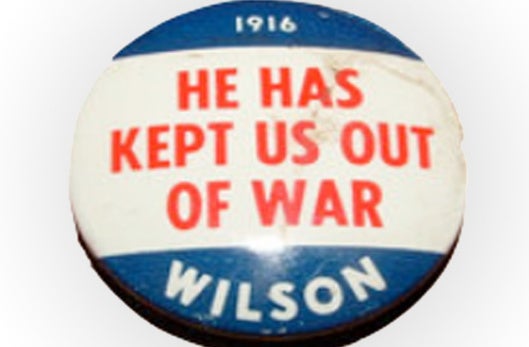
Second, the British would pull all strings required to drag the US into the war. The re-election of Woodrow Wilson as the President in 1916 made this task difficult. In one of the closest Presidential Elections of US, President Wilson managed to defeat his Republican opposition, Charles Hughes. California proved to be a decisive State, which Wilson won by a margin of mere three thousand votes. The entire campaign of Wilson was based on the fact that he kept the US out of the World War, something that looked like a triumph and ensured his election victory.
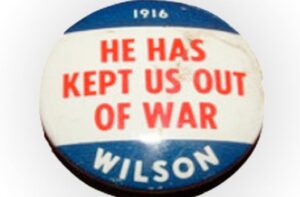
Badge from the Woodrow Wilson Presidential campaign of 1916.
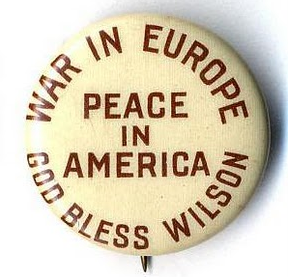
Another badge which celebrates Wilson keeping US out of war.


However, the British desperation would make them explore, and exploit, the Jewish dream for the promised land. In the 1890s, a man named Theodor Herzl would go on to write a book titled ‘Der Judenstaat’ – The Jewish State. He then would deliver a powerful speech at the First Zionist Congress held in 1897 in Basel. He proposed a clear idea to achieve the Jewish State – a steady and gradual migration of Jews to Palestine. To ensure that Jews aren’t seen as hostile invaders, he recommended that they purchase farm land and houses, and strengthen the population. This, he timelined, to happen for about fifty years. Once a substantial population of Jews is mobilised, he called for an independent sovereign State to be founded – the State of Israel. While it seemed far-fetched at that time, Israel would surely be founded in just about fifty years, in 1948, adopting Herzl as the father of the new nation.

But the Zionist aspirations looked feeble during the World War. Until, of course, the British would use this for their ends. As the Jewish lobby in the US exerted strong influence over the Presidential policies, the British wanted the Jews to lobby for the US to enter the World War. In return, the British would promise – no points for guessing! – the promised land of Palestine. In a letter written by Arthur Balfour, the British Foreign Secretary, to Lord Rothschild, a leader of the British Jews, Palestine was proposed to be made the Jewish State that the Jews aspired to build. This worked, and within a month of President Wilson taking his oath, he declared war on the Central Forces.
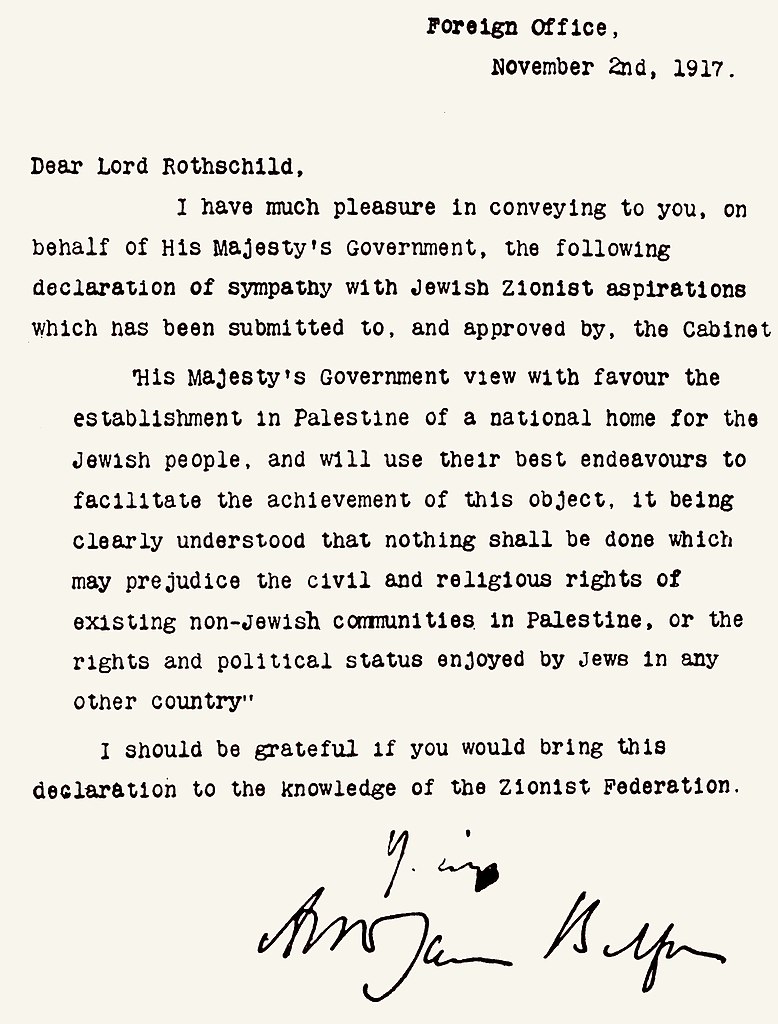
Balfour Declaration (1917)


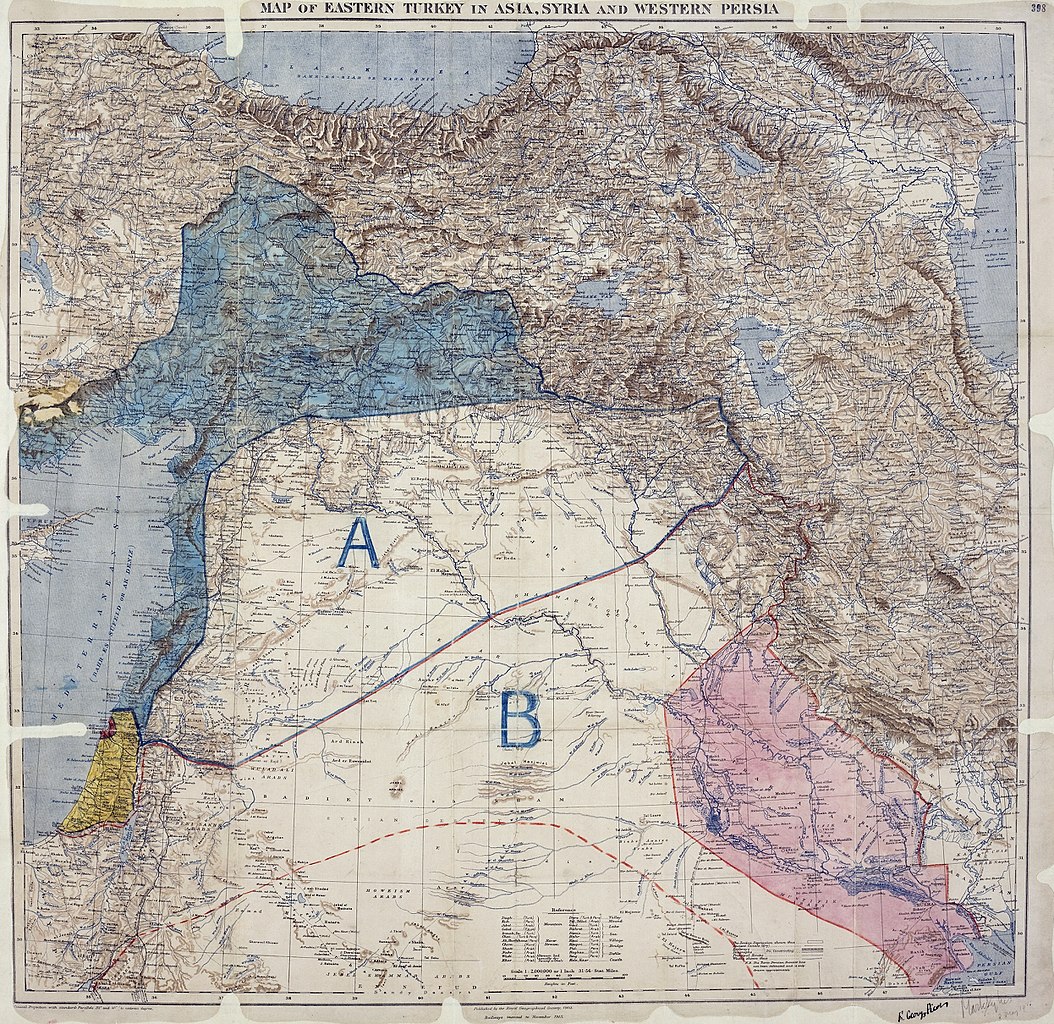
Third, the alliance of Britain, France, and Russia, involved some daydreaming. The Triple Entente, as they were called, would cut out the middle east between Britain and France. The Sykes-Picot Agreement would demarcate areas to be taken up as their own by these two countries. The British promised themselves that they would get Jordan, Southern Iraq, and – I need a drum roll here – Palestine!
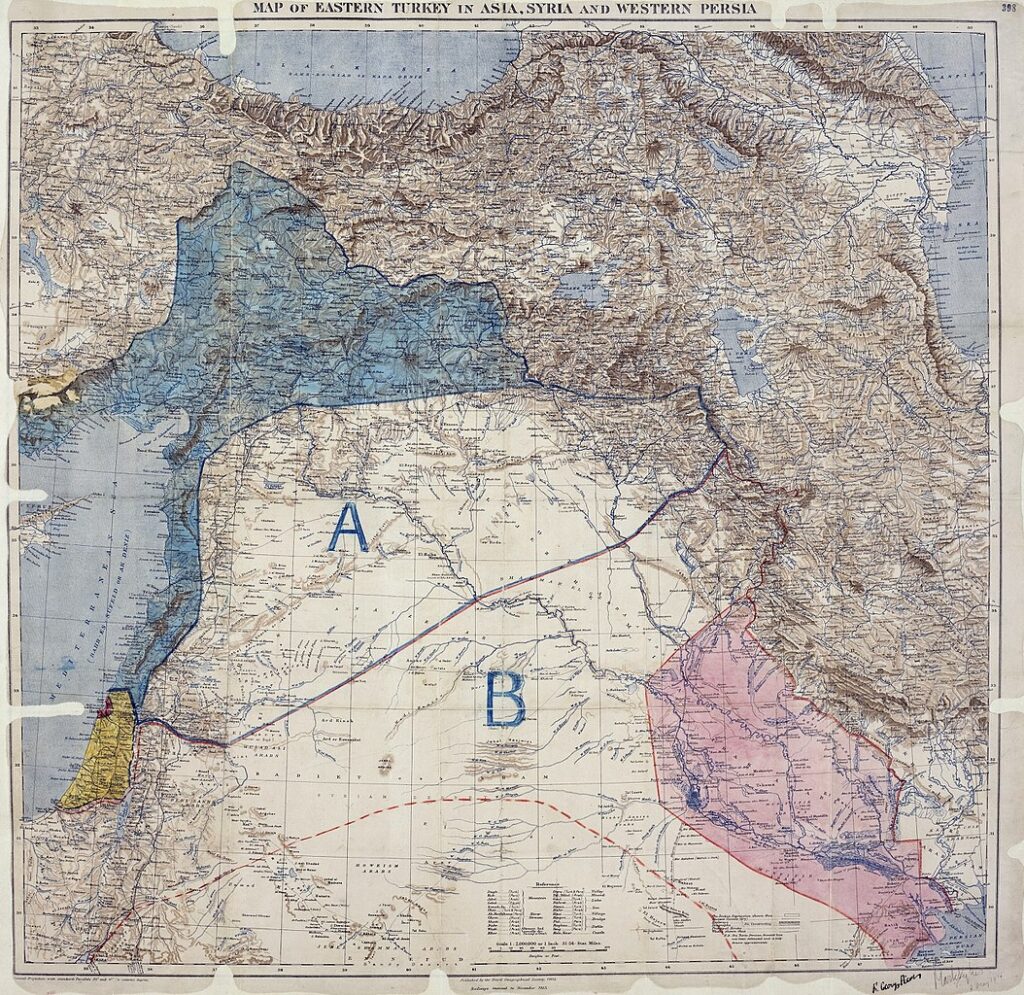
The Demarcations by the Sykes-Picot Agreement (1916)


After the war, the British proved true to their own promise to themselves. Until ousted in 1948 by the birth of Israel, they governed Palestine as a Mandate under the League of Nations. Their hearts would change again as they find President Gamal Abdel Nasser of Egypt to be their new enemy as he nationalised the Suez Canal. They then join hands with Israel and invade Egypt, only to be humiliatingly subdued and defeated by Nasser.

The modern history of Palestine is, thus, riddled with conflicting promises. The British slyly withdrew when they could control the territory no more and had a final nail in the coffin as a super-power.

It is this Palestine, the land that was promised not once, but thrice – to the Arabs, the Jews, and the British themselves – that cries under the oppression and the growing settlements of Israel. A land where Moses, Jesus, and Muhammad (may peace be upon them all) walked, now witnesses the flow of blood. And the new Holocaust continues.